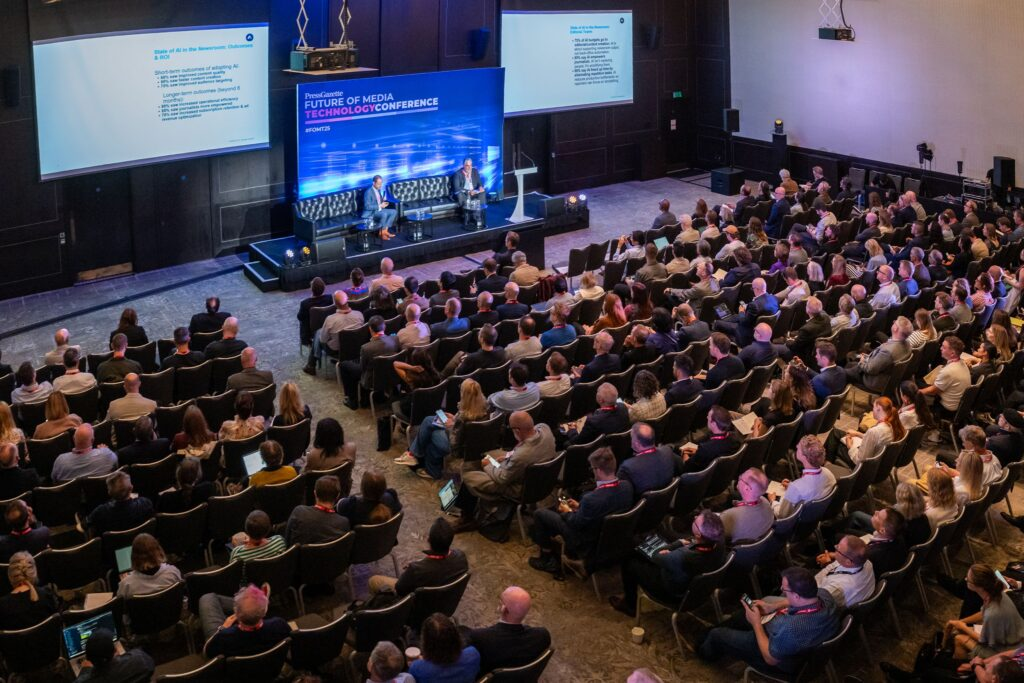
Two weeks ago, I boarded the Eurostar from Paris to London for the Future of Media Technology Conference. For years I work closely with publishers like Le Monde, Le Parisien, Ouest-France, so I know first hand the challenges, dilemmas, and goals of French publishers. Sitting in a room media leaders from UK publishers opened my perspective to the realities and goals of other markets. Here are three things that stuck with me.
1. Publishers are done chasing raw numbers
Search traffic is drying up (welcome to the zero-click era!). But staring at a number that keeps falling is discouraging and doesn’t tell you much, so publishers are building whole roles and teams around metrics that explain what readers actually do.
For instance, The Times introduced a new company-wide north star metric: the ratio of daily to monthly active users, because it measures habit, not just reach. Furthermore, The Guardian created a “Chief Supporter Officer” role, replacing the old growth-and-acquisition mandate with one focused on keeping the readers you already have engaged and supported.
Dan Rua from Admiral put it in a way that stuck with me: publishers treat every visitor like they should subscribe immediately, but real relationships don’t work that way, just like you don’t jump straight to marriage. First you need to be introducted, have repeated contact, grow trust, then head to the altar (or in this case, convert). When someone leaves without subscribing, the better question isn’t “why did we fail” but “what were they trying to do, and how do we bring them back.” It’s a more useful question than watching a usage number drop, and a smarter way to stop leading with negative numbers.
2. Trust becomes a product feature
The FlipPay / Made By Humans session stayed with me longest. They showed real cases of fabricated experts, fake quotes and AI-generated commentary that made it into major publications before anyone caught them. Readers consistently say they trust content more when they know a human made it, so that signal has to be visible and provable rather than assumed.
Another speaker made a point I hadn’t framed that way before: the audience didn’t disappear. It’s still there, still wanting the same content, just getting it through Google’s AI answers, chatbots and summaries without ever landing on the publisher’s site. AI made the audience invisible to the publisher. Which means rebuilding trust and rebuilding visibility are the same job: show readers clearly that a real person is behind the work.
Publishers aren’t the only ones dealing with this. Anything now competing with purely AI-generated output has the same problem.
3. It’s worth looking past your own market
The biggest thing I took home was a contrast in emphasis. A lot of what I hear in the French market is about protecting what already works: locking down content, defending existing formats, keeping editorial habits intact. In London the conversation was somewhere else entirely: licensing deals with AI companies, partnerships with content creators, revenue diversification, fighting AI misinformation.
Both make sense for where those markets are. A day with people who frame the industry’s problems differently was worth more than any single session on the program and a good reminder to step outside the market you know best every so often.
What I’m taking home
One line for the whole day: as traffic gets less reliable and audiences get harder to see, publishers win on trust and direct relationships.
Genuinely good conference, and I’d recommend it to anyone who wants to talk about the future of the industry with their feet on the ground.
Join us at the Twipe Digital Growth Summit is back in Leuven, Belgium, on 15 October, 2026, to continue the conversation on how technology is shaping the future of news.

Other Blog Posts



Stay on top of the game
Join our community of industry leaders. Get insights, best practices, case studies, and access to our events.
"(Required)" indicates required fields