Insights from a Knowledge Breakfast
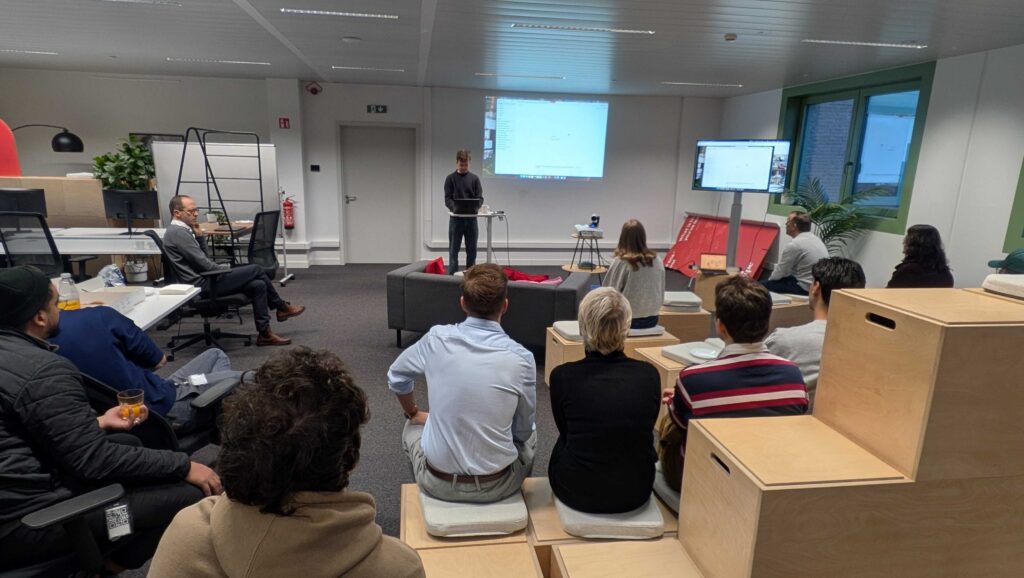
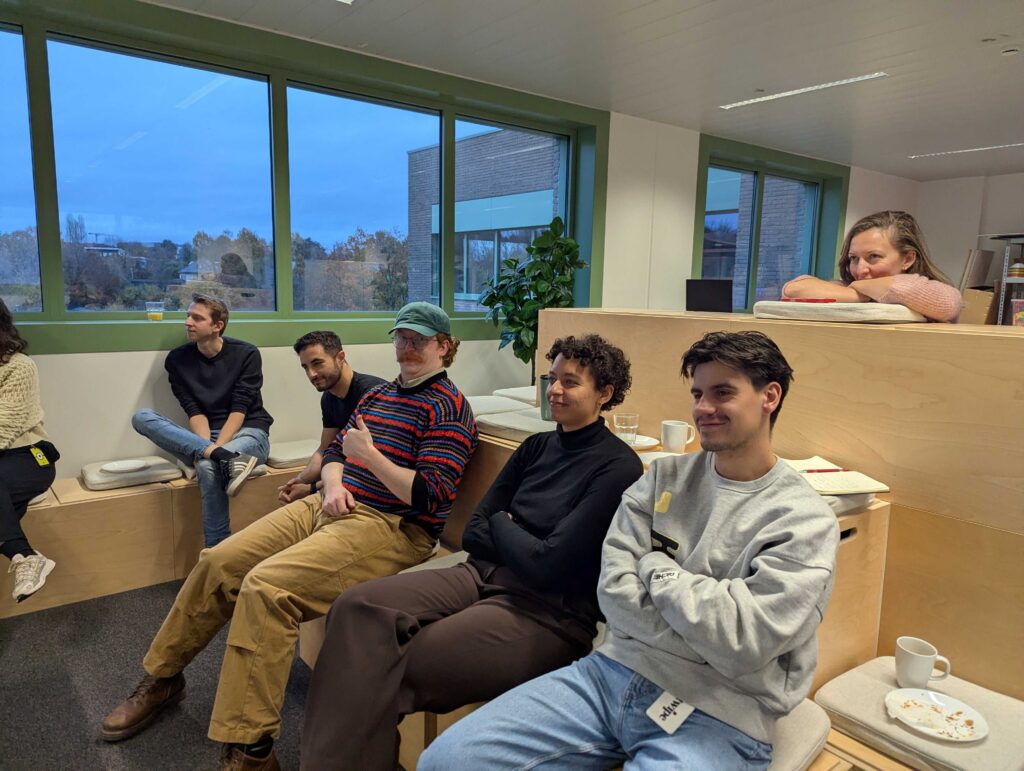
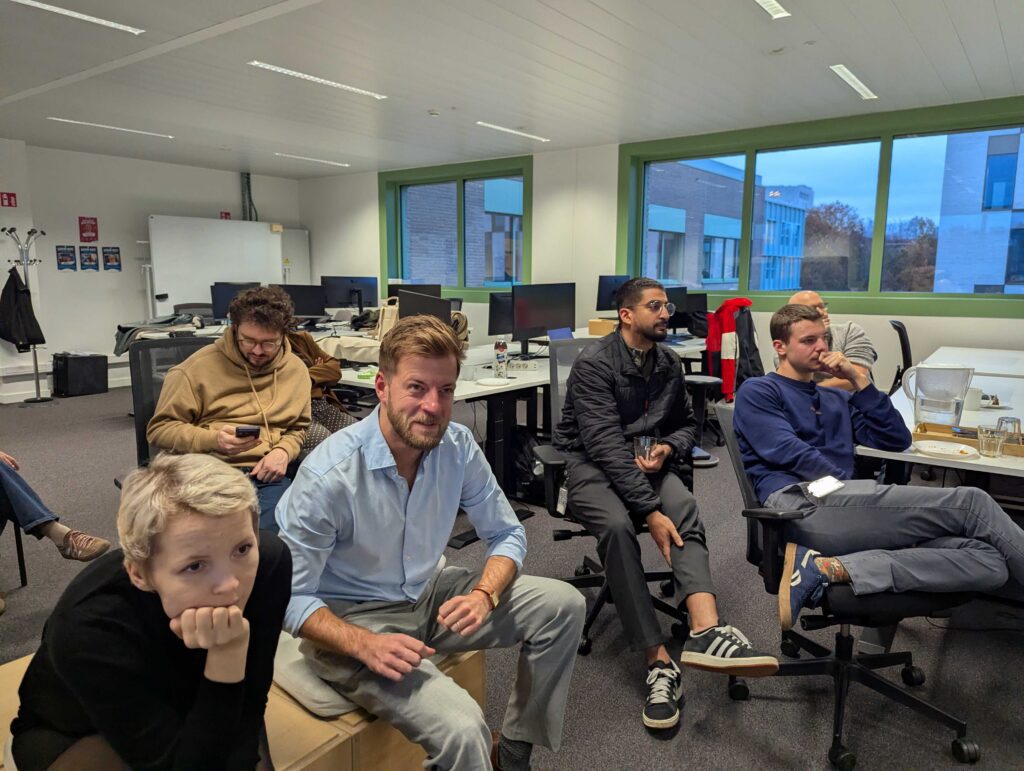
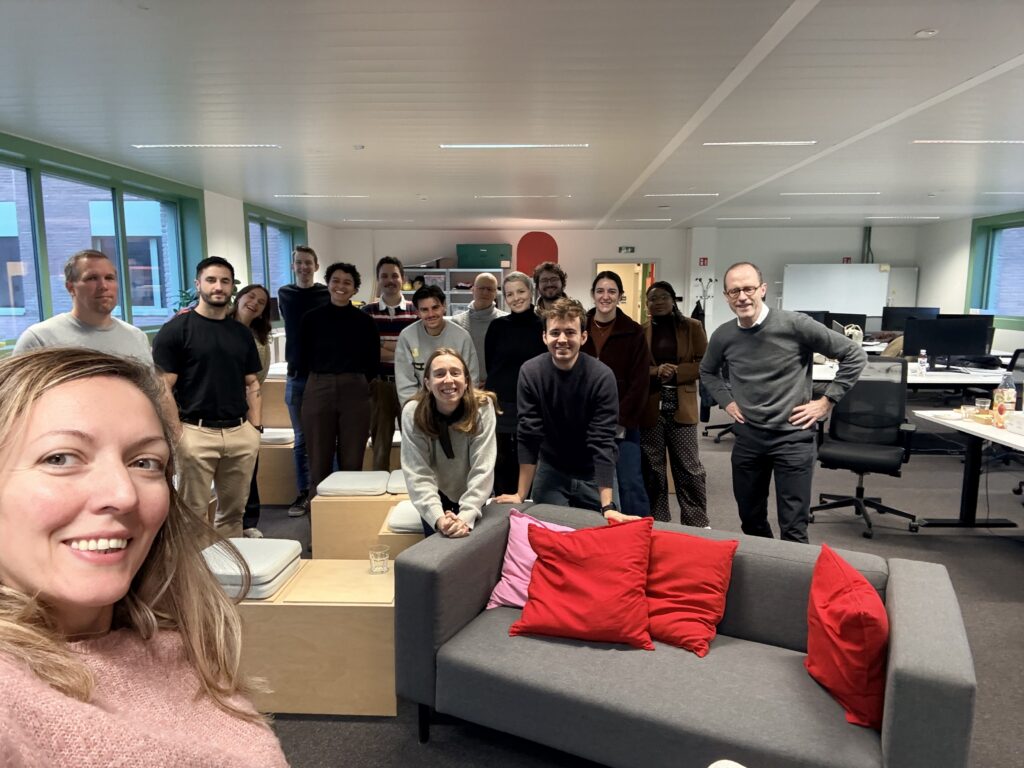
On Friday 20 November 2026, Twipe hosted one of its regular Knowledge Breakfasts, a session where we invite customers or external speakers to share their insights with the company over breakfast. We welcomed Tim de Bauw, a founding engineer at Mindoo, a startup that builds AI agents for hospitals. Over pastries and coffee, Tim showed how his team works with AI agents to build and ship software.
“But what does a medical AI startup have to do with publishers and newsrooms?”, you might ask. Tim and his team build solutions for hospitals, which are among the most cautious adopters of new technology. Patient data has to stay protected at all costs and every AI tool has to be proven safe, yet the team is able to ship improvements almost daily. For example, its AI scribe takes over doctors’ reporting so they can focus on what matters: treating patients.
Publishers face the same balance. They need to protect their readers’ data and the trust their journalism depends on, while still reacting fast to developing news stories and the general business environment. AI gives publishers more flexibility with their content and its formats, which opens up new possibilities.
Out of the many insights and novel approaches from an AI startup, we have collected the key takeaways:
Code is no longer the bottleneck
Mindoo’s engineers now ship several small pull requests a day, where they used to ship one bigger one a week. Writing code is no longer what slows them down. Instead, their work now revolves around understanding what the client actually needs. So every engineer spends at least one day a week on-site with clients, sitting next to the people who use the software.
We believe that the same shift is happening in journalism. AI tools are taking over the repetitive parts of the job: transcribing interviews, tagging and summarizing articles, reformatting stories for different platforms. Less friction means more time for the work that AI simply cannot do, like going out on the ground, making the calls, and building trust with sources. For publishers, the opportunity isn’t only more content but also more time spent on quality journalism.
Trust is what lets you hand over more
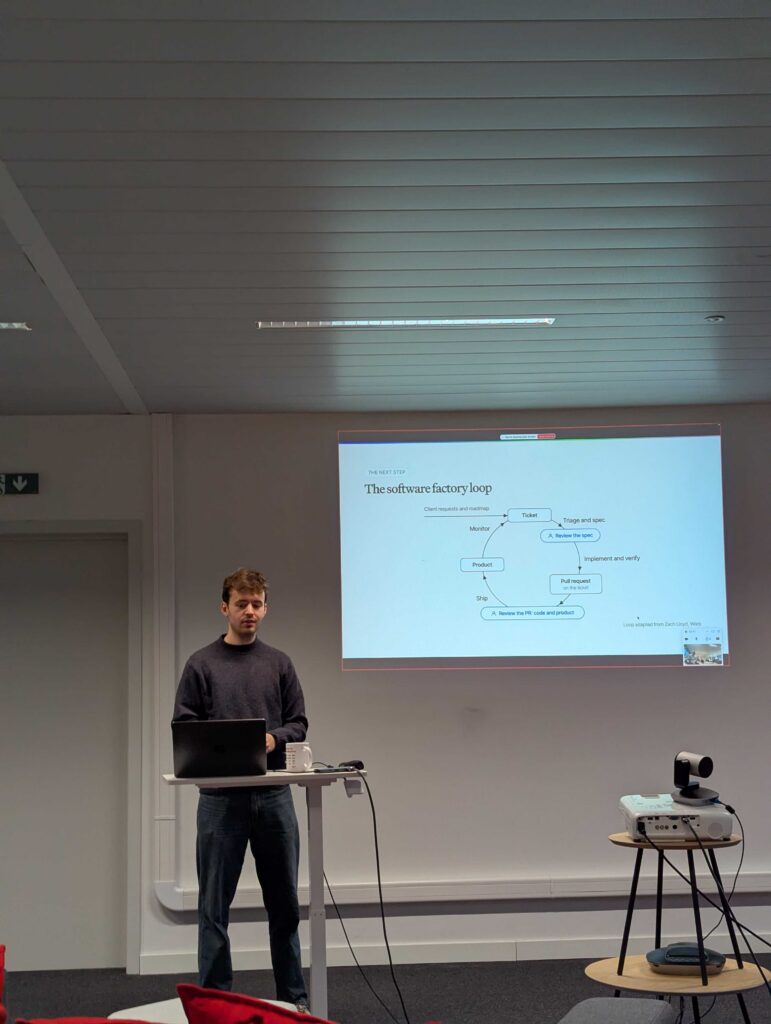
Tim described a ladder of AI automations: it runs from pasting code into a chat, to autocomplete, to agents you steer by hand, and to autonomous agents that turn a plan into a finished change. The next step is a “software factory,” where agents pick up tickets themselves. Each rung takes more trust. You earn that trust with quality gates: strict linting, which is suddenly more useful than ever, plus automated tests, several AI reviewers, and finally a human review.
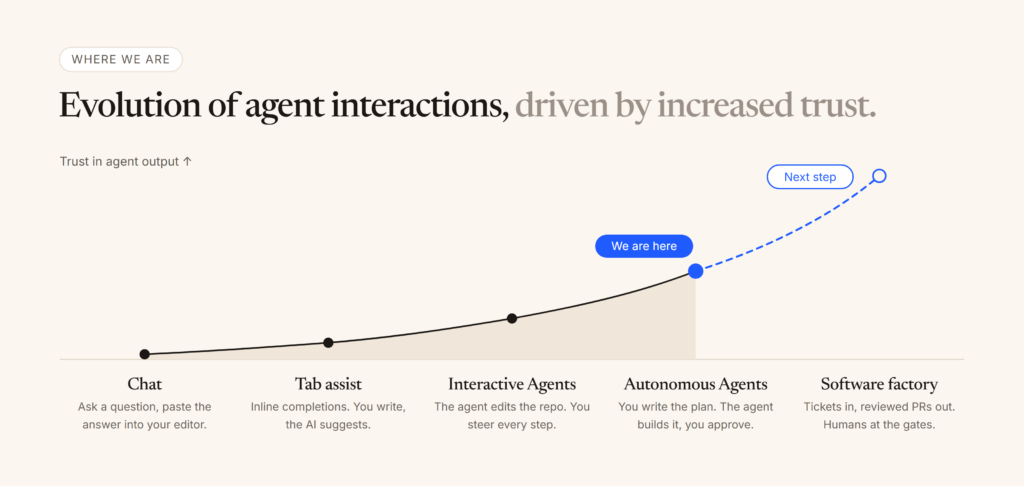
Each step up the ladder hands the AI more responsibility, but only as fast as trust allows.
Obsess about automation
Teams that move fast make friction go away. Mindoo automates as much as possible, starting with context. This means keeping everything an agent might need inside the codebase, from features to onboarding instructions, so there’s a single source of truth. Agents are also allowed to say where they got stuck, so the next run doesn’t get stuck in the same place.
That’s what lets them move fast. In one example Tim gave, when an error shows up in production, an agent starts investigating straight away, reading the logs and other related documents it has read-only access to. By the time an engineer opens the error report, a proposed fix is often already waiting for review. Colleagues outside engineering can do the same: drop a screenshot and a short request into a team chat channel, and an agent gets to work immediately until human review.
So Tim, why keep humans in the loop at all?
People still need to review the plan at the start: is this worth building? Does the architecture make sense? They also check the result at the end, including UI quality and the edge cases where AI makes mistakes. Ownership and oversight don’t end, even when the agent does most of the work.”
What it made us think
As code gets cheaper, being close to your customers matters more, not less. And as the breakfast was coming to an end, Tim gave us a closing challenge: which piece of friction in your team’s week could you hand to an agent? And what would you do with that time? We bet that the answer is to spend more time with either your clients, team, and/or product, and that pays off anywhere from the newsroom to the factory floor.
Breakfast was on Twipe, as always. But the fresh perspectives (alongside refreshments😄) from outside the building were the real treat. Thank you, Tim, for getting our day off to a good start.
Other Blog Posts

Stay on top of the game
Join our community of industry leaders. Get insights, best practices, case studies, and access to our events.
"(Required)" indicates required fields