Twipe Insights
From Marseille with Conviction: My Key Takeaways from WAN IFRA World News Media Congress 2026
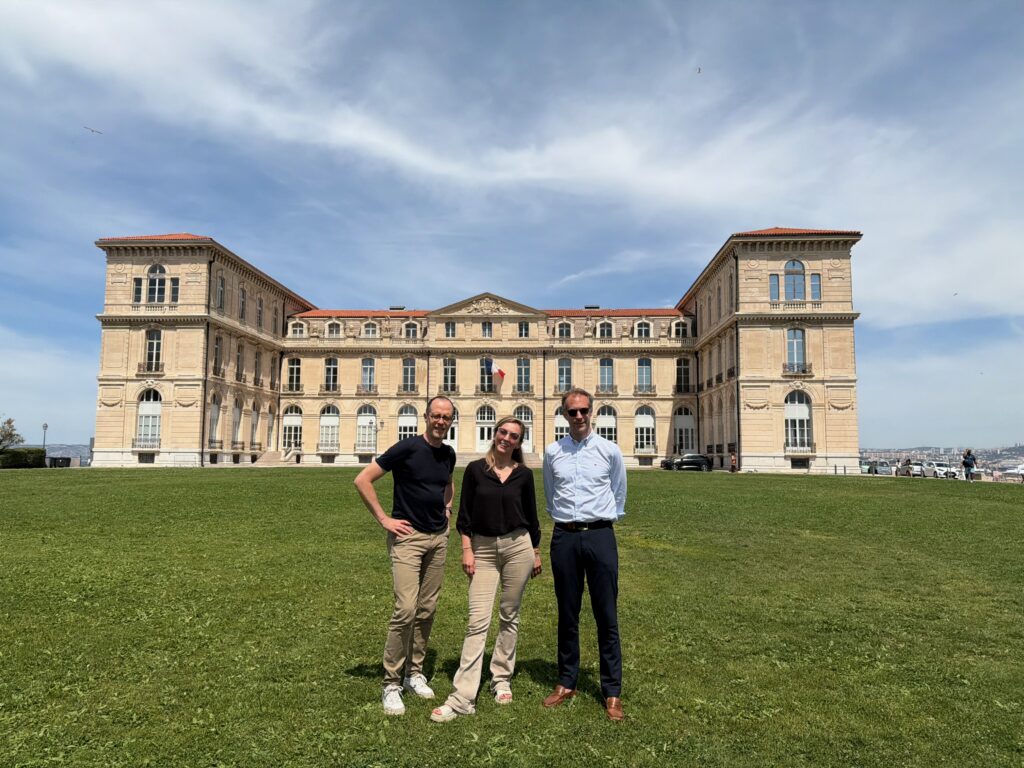
1,100 delegates from around the world gathered for three days in the stunning Palais du Pharo overlooking the Mediterranean in Marseille — only the second time in the history of the association that the World News Media Congress has taken place in France, the very country where WAN IFRA was founded in 1948.
I came with questions. I left with conviction.
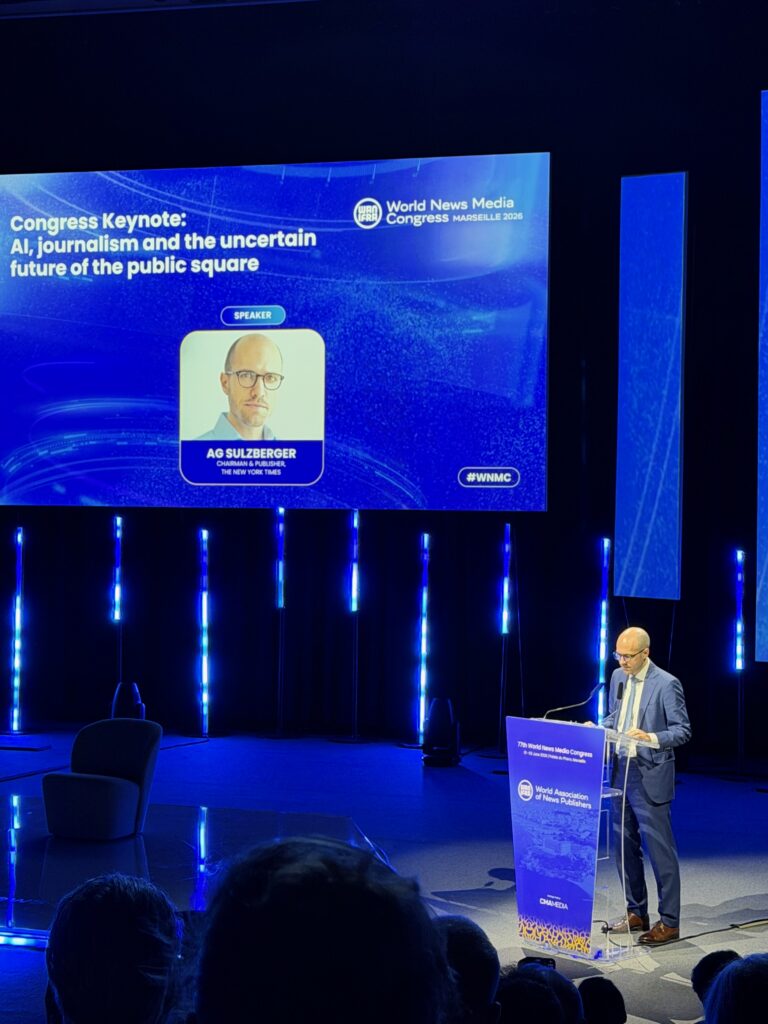
The news industry has been navigating existential pressure for years — declining print revenues, platform dependency, the rise of AI-generated content. Yet the mood in Marseille was not one of resignation. Quite the opposite. Inspired by a bold and unusually candid keynote from New York Times publisher A.G. Sulzberger, there was a palpable, shared feeling: this industry will fight, adapt, and matter more than ever — in a world increasingly dominated by Silicon Valley’s AI giants.
Here are my four key takeaways.
1. AI is not killing journalism. It’s raising the stakes for it.
The AI anxiety is real, but the conclusions in Marseille were surprisingly nuanced — and energizing.
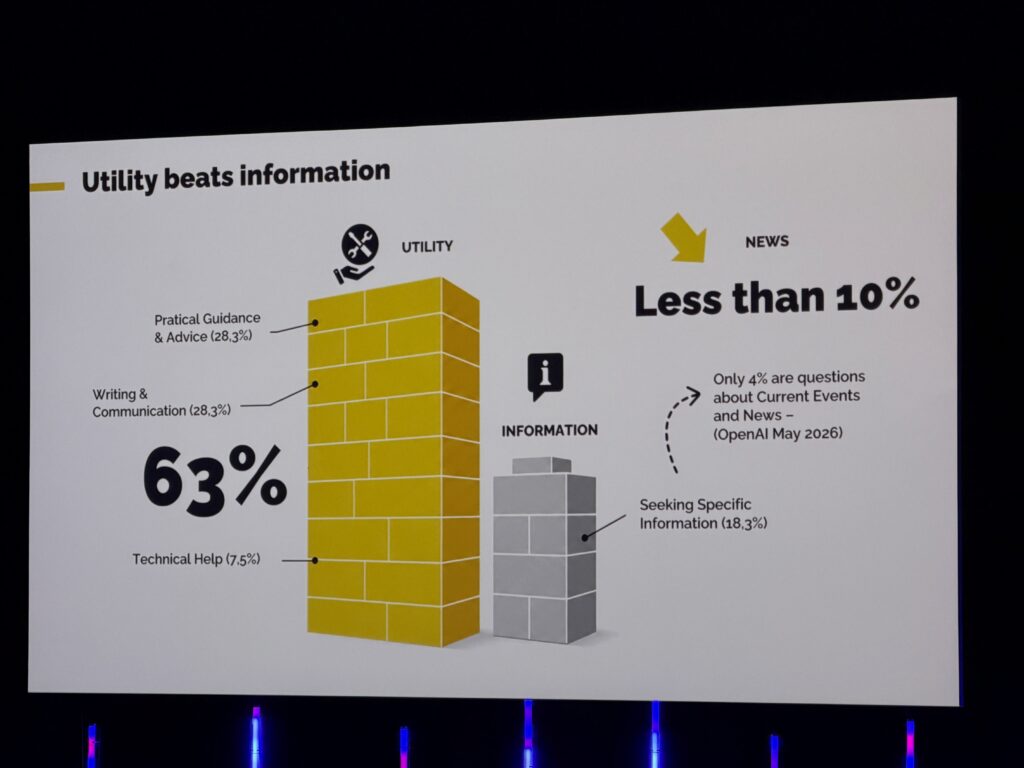
Yes, AI Overviews are hitting traffic. Yes, publishers are seeing measurable declines in referral visits. But here is the critical counterpoint, shared by Ezra Eeman: less than 10% of all queries in ChatGPT are news-related. AI chatbots are not — at least not yet — a primary destination for news. They may reshape the information funnel, but they are not replacing the news brand.
More provocatively: AI chatbots have a trust problem. OpenAI’s own research acknowledges that large language models hallucinate approximately 2% of the time. Sulzberger put it best, to an auditorium of 1,100 people nailed to their seats: “AI is not often wrong — it is often confidently wrong.”
AI is not often wrong — it is often confidently wrong. A.G. Sulzberger
People know this. We are already seeing users double-checking LLM outputs in other LLMs, because they do not trust a single source. In a world of confident machines, trusted human journalism becomes a scarcer and more valuable commodity.
The cases that stuck with me make this concrete:
- Die Zeit used AI to unlock and disclose previously inaccessible Nazi archives — a story only possible with AI, and one that generated a significant wave of new subscriptions. Journalism AI cannot replace; AI enabling journalism humans could not do alone.
- Ippen is now delivering hyper-local, personalized regional content about local elections to communities that were previously underserved. That is new journalism at new scale, powered by AI.
- Le Monde, rather than waiting to be scraped, negotiated actively with OpenAI. Their AI-distributed content now reaches high-intent audiences converting at 17x the rate of Facebook and 173x the rate of Google Discover. That is not a threat to monetize around — that is a new revenue lever.
2. Original and recent content is gold. Stop giving it away.
This was Sulzberger’s sharpest message, and it landed hard.
The scale of what the news industry produces — and what AI companies take — is easy to abstract away. Sulzberger made it concrete. In 2025 alone, the New York Times published nearly half a million works — articles, photos, videos, podcasts — at a cost of over $2 billion, with journalists on the ground in all 50 US states and 155 countries, including more than 70 journalists and support staff in Ukraine. Stretch that across 175 years and 20 million original works, and the picture of what journalism contributes to public understanding comes into sharp focus.
That original, human-verified content is precisely what AI companies need most: over 30% of information queries in LLMs are attributed to news content. Without journalism, the AI answer machines become less accurate, less current, less trustworthy.
His analogy was blunt:
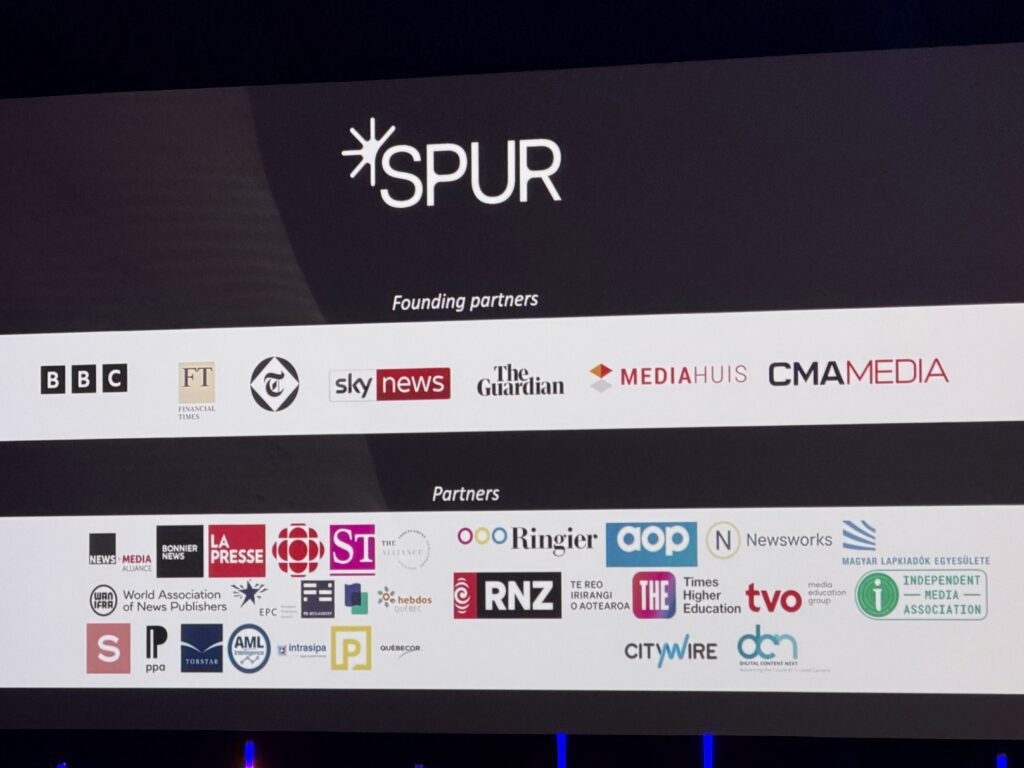
The message to publishers: engage, but from a position of strength. The SPUR Coalition — now joined by CMA Media as a founding partner and WAN IFRA as a strategic partner, alongside the Financial Times and Mediahuis — is rapidly gathering critical mass. This is not a defensive posture. It is a structural move to ensure that publishers extract fair value from the AI economy they are fueling.
Robots.txt is not enough. Content protection, rights management, structured access — these are no longer technical nice-to-haves. They are strategic imperatives.
3. “Create for humans. Build for machines. Prepare for agents.”
This line, from Sebastian Krauze at Austrian publisher Kleine Zeitung, was the clearest product framework I heard all week. It deserves to be written on the wall of every digital publishing team.
Create for humans means doubling down on what machines cannot replicate: original reporting, trusted editorial voice, deep community relationships. The super user — the reader who pays, who reads daily, who advocates for your brand — is the foundation of sustainable digital publishing. Scroll showed how AI can help identify and nurture exactly these readers, building deeper relationships with selective audiences that were previously impossible to serve at scale.
As Xavier Niel, shareholder of Le Monde, framed it: society needs strong journalistic organizations more than ever. That need does not disappear when AI arrives. It intensifies.
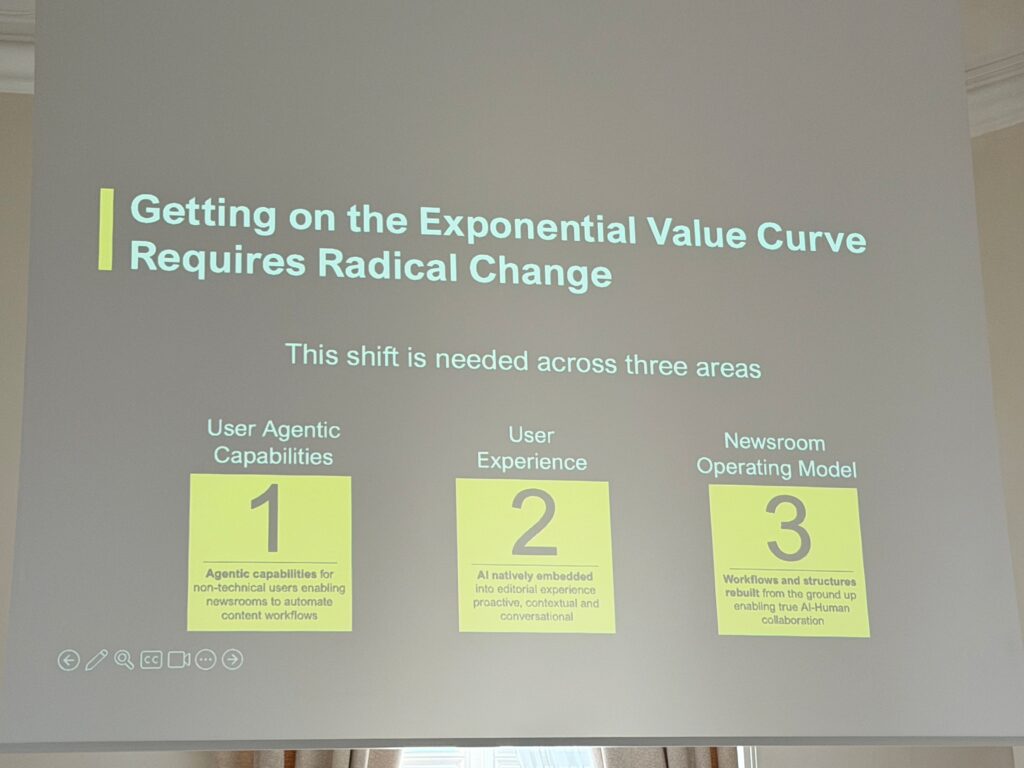
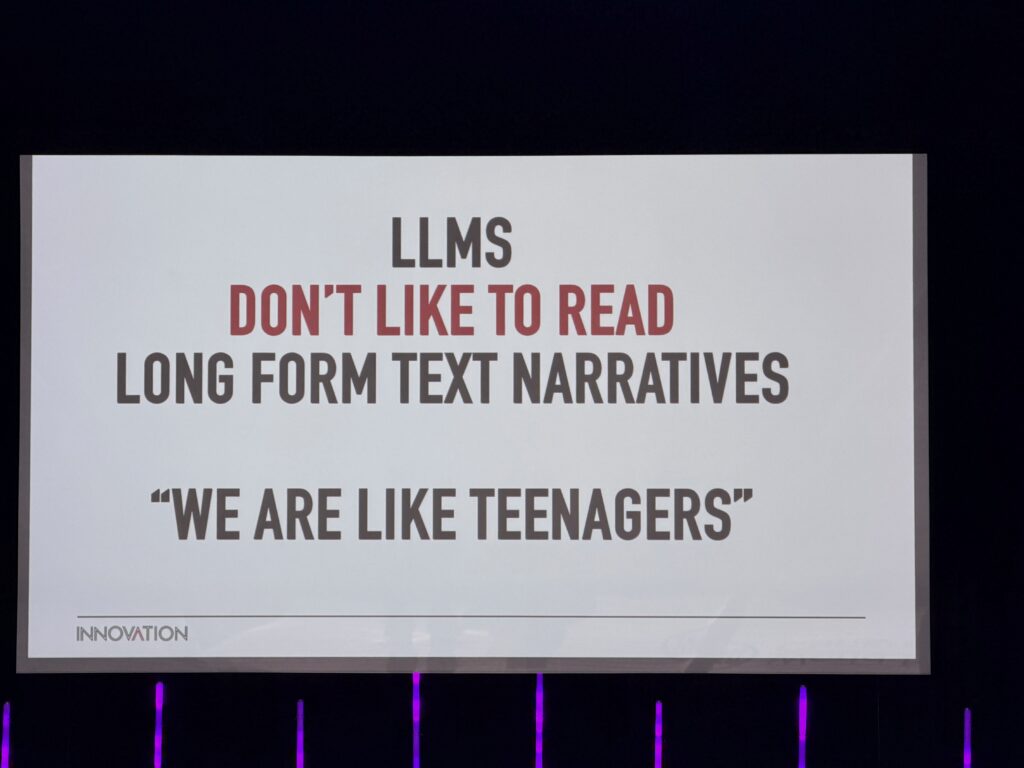
Build for machines is the less comfortable instruction. Your content needs a machine-readable interface — not just for today’s crawlers, but for the LLMs, agents, and discovery surfaces that will increasingly mediate how information flows. Juan Senor captured it memorably: prepare your content “in the words of a teenager”, because that is how large language models read. Simple, structured, direct. The Microsoft Content Marketplace and similar platforms represent a new distribution infrastructure publishers cannot afford to ignore.
Prepare for agents is the frontier. Politico outlined a framework of three emerging agent types already reshaping how audiences access information: signals agents, alerting agents, and briefing agents. Google and Microsoft have both announced web agent initiatives. Publishers who are not building agent-ready distribution strategies today will be playing catch-up in 18 months.
4. Brand is the only moat that cannot be scraped.
If there was a single idea that threaded through every session, it was this: in a world where content can be generated at scale, where platforms have commoditized distribution, and where AI has changed what “search” means — brand is the last real competitive advantage.
This was the subtext of Sulzberger’s speech. It was the explicit argument of INMA’s Earl Wilkinson at the INMA Congress in Berlin earlier this month. And it was everywhere in Marseille.
A brand built over decades — editorial identity, reader trust, community belonging — cannot be replicated by a language model. It cannot be disintermediated by a platform algorithm. It cannot be bought by a competitor. What it can do is anchor a subscription business, command a premium in AI licensing negotiations, and give readers a reason to come back every day.
For publishers, this means brand can no longer live inside the marketing department. It must become the operating system of the entire news organization: what you cover, how your product feels, who you hire, how you price, how you build community.
The publishers who will thrive in the next decade are not necessarily the largest. They are the ones who are most unmistakably themselves.
What does this mean for publishers?
The four themes above — AI raising the stakes for journalism, the strategic value of original content, the create/build/prepare framework, and brand as the ultimate moat — point toward a common conclusion: the digital transformation is not slowing down. It is entering a new, more complex, and ultimately more interesting phase.
For publishers, the question is no longer whether to embrace AI into their strategy. It is how to build a digital model that is defensible, differentiated, and financially sustainable leveraging AI to its maximum benefit — in a world where AI generates noise at scale and trusted journalism becomes scarcer and more valuable.
In the coming weeks, I will publish a deeper analysis of what this specifically means for publishers: which strategies are gaining traction, which bets are worth making, and what the most innovative players in the industry are actually doing. Stay tuned — there is a lot to unpack.
Are you navigating these questions in your own organization? I would love to hear what you are working on. Connect with me on LinkedIn or reach out directly.
See you in October?

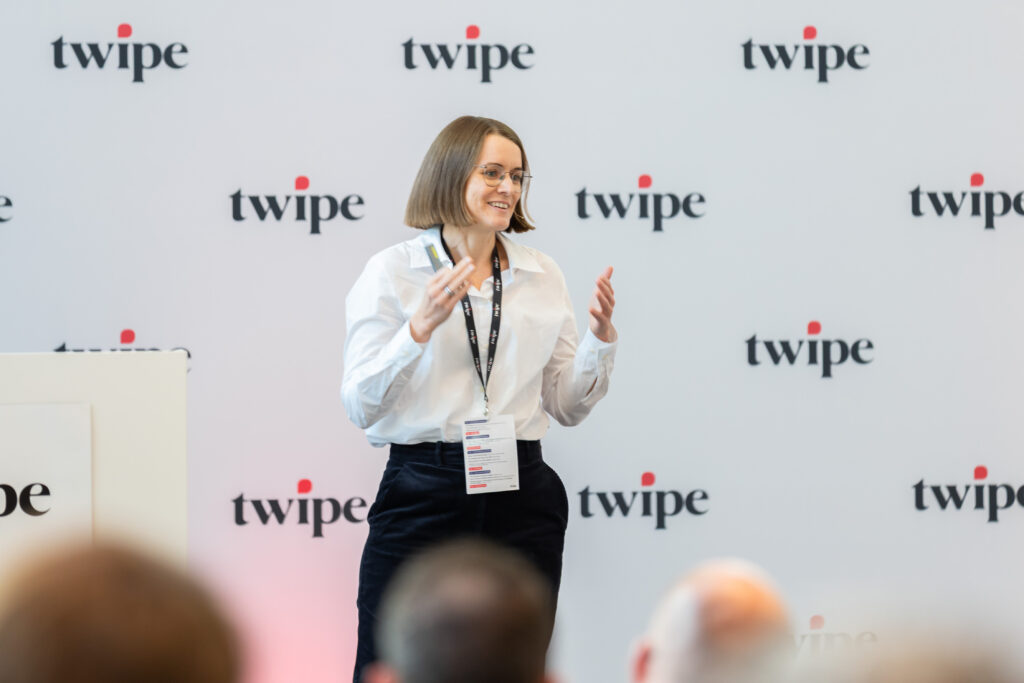

These conversations do not stop when the congress ends. At the Twipe Digital Growth Summit on October 15th in Leuven, we bring together over 140 media professionals for a day of case studies, workshops, and the kind of frank conversations that actually move the industry forward
If Marseille reminded me of anything, it is that this community — publishers, technologists, strategists — is stronger when it acts together. We hope to see you there.
Let’s shape the future of news. Together.
Other Blog Posts



Stay on top of the game
Join our community of industry leaders. Get insights, best practices, case studies, and access to our events.
"(Required)" indicates required fields