You can argue that for about two decades, publishers didn’t really own their audiences, but rented them: search sent the traffic, social handled the reach, and the actual relationship with the reader lived on someone else’s platform.
It’s common knowledge that this arrangement is now ending. According to the Reuters Institute’s Digital News Report, referrals to publishers are down 65% from Facebook and 50% from X over the past two years. Google’s AI Overviews increasingly answer the question right on the results page, so the click never happens. And younger readers are starting to ask a chatbot instead of visiting a homepage at all.
So what do you do about it? Across the last two Digital Growth Summits, we’ve seen several cases of publishers arguing that the goal should be to rebuild a direct relationship with readers that no platform can stand in the middle of. In this post, we share how they’re doing so.
Own the demand, don’t rent it
Start with the core problem. If readers only find you through a platform, then the platform owns the relationship. And whatever a platform gives you, it can take away. The way out is to get readers to come to you on purpose.
Le Monde understood the cost of renting readers clearly, even at a moment that looked like good news. In 2024 the paper hit an all-time high in search traffic, but Chief B2C Subscription Officer Anne Tostain wasn’t celebrating. Only 30% of visits were direct, while half came through search, which meant the paper’s growth had quietly become Google’s to decide. She reframed direct traffic for her team as a matter of sovereignty, the thing that decides whether Le Monde controls its own future.
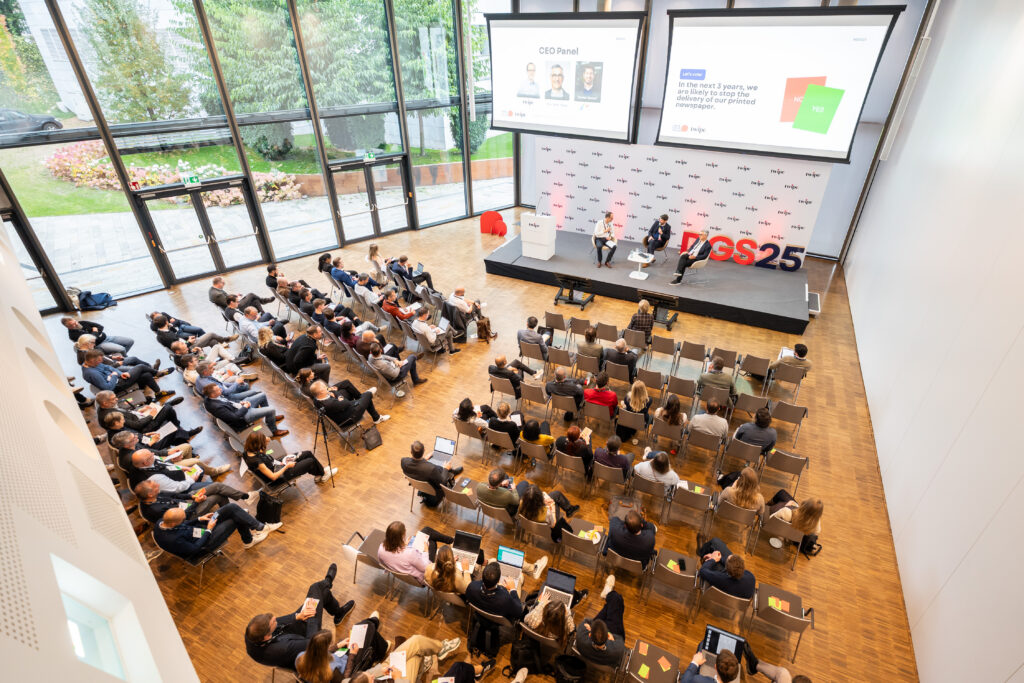
She pushed toward the levers that earn a daily habit rather than a one-off click: sharper curation and personalization so there’s a reason to open Le Monde every day, live audio events and more visible journalists that an aggregator can’t reproduce, and brand partnerships that keep the title in front of readers well beyond the search box.
The Economist reached the same conclusion from the opposite end of the business. Trust in news among young people has fallen from 70% to 40% over twenty years, and when trust erodes, the reflex is to cut brand spending and pour the money into cheap performance ads that chase clicks.
They went the other way. As VP of Performance Marketing Tom McCave explained, pulling back on brand doesn’t actually save money. Rather, it quietly starves the demand everything else depends on.
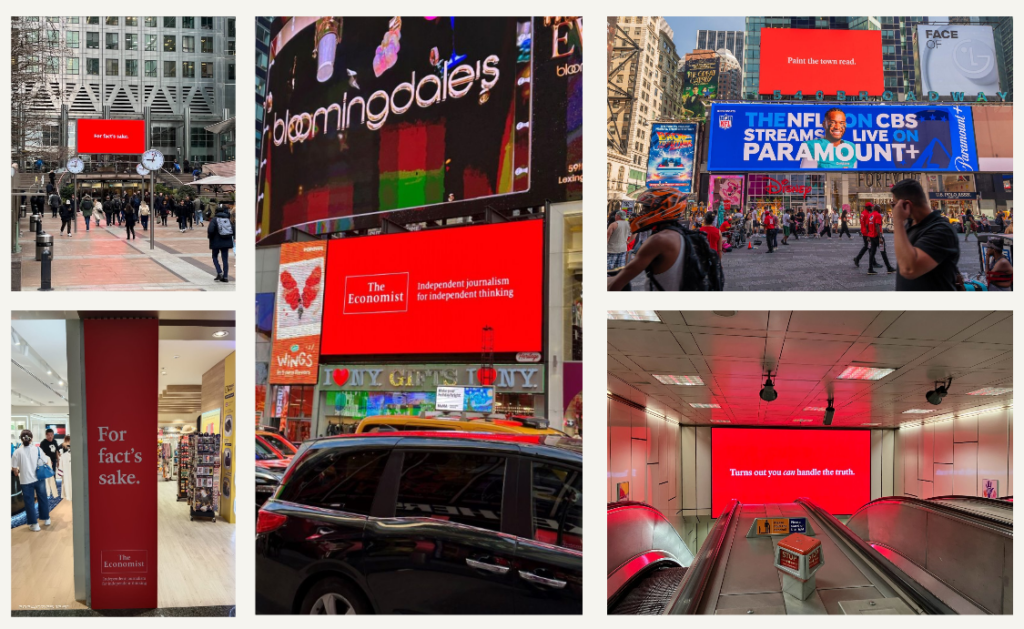
So The Economist reinvested in simply being noticed: billboards in New York and London, sponsored shirts at tennis tournaments. It worked. Ad recall rose and unaided brand awareness doubled, meaning twice as many people now name The Economist on their own, with no link or ad to prompt them. That is the raw material of a direct visit: a reader who shows up because they decided to.
What do these cases show us? In short, give readers a reason to seek you out by name, so the relationship belongs to you and not to whatever platform sent them.
Give people a reason to come to you
Being sought out by name only works if there’s something worth seeking. A news site that looks and feels like every other news site gives nobody a reason to come directly. So the next move is to build a product around a real reader need.
Svenska Dagbladet found exactly such a need. Its team noticed that a lot of people had started avoiding the news altogether: the always-on feed left them anxious, every outlet looked the same, and they wanted to stay informed without being pulled into endless doom-scrolling.
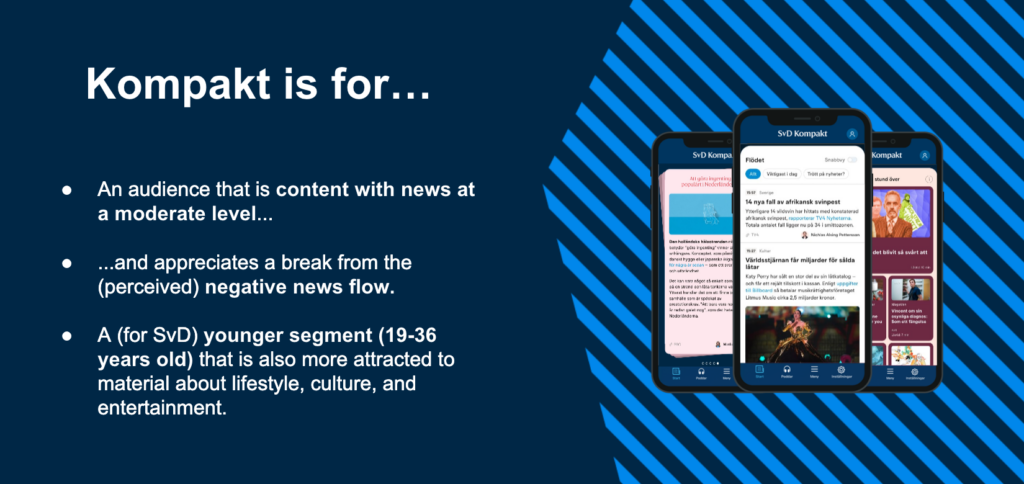
Instead of pushing more content at these readers, SvD built them a calmer product, SvD Kompakt: the important news, summarized and written by journalists with a clear personal voice, under the promise “read less, know more.” It even added a “Tired of the news?” button that surfaces lighter stories.
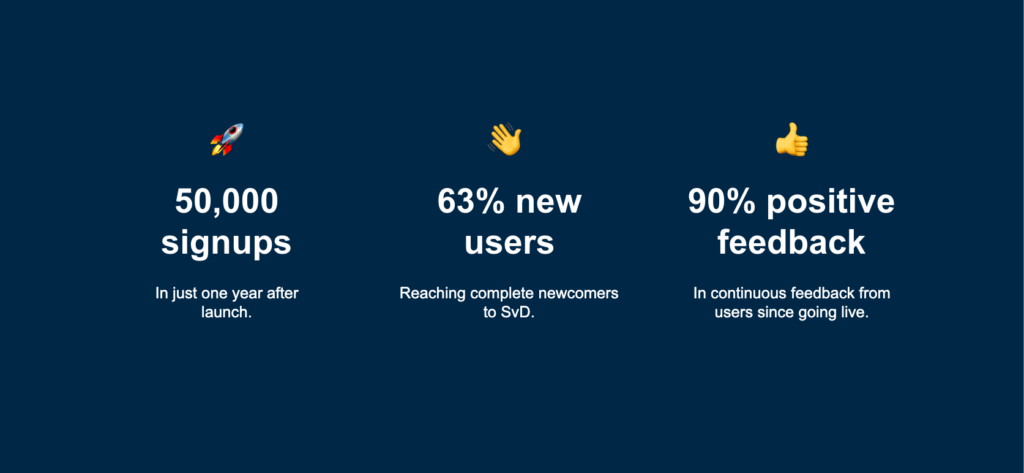
A year in, Kompakt had 50,000 signups, 63% of them brand-new users, and 90% positive feedback. But the most telling result was something a reader said after launch: “Finally I can read the news without getting a knot in my stomach.” When a product solves a genuine problem like that, you don’t have to fight for the direct visit. The reader comes back on their own.
Use AI to build what a chatbot can’t
The first two moves are about winning readers before AI even enters the picture. But AI is also where a lot of publishers are about to make the relationship worse instead of better.
Schibsted‘s partnership with OpenAI, for instance, pushed impressions up quickly, yet the click-through rate fell from 6% to 1%. As Director of AI and Data Juan Carlos Lopez Calvet put it, feeding commodity news into someone else’s interface buys you a little brand visibility, but almost no actual audience.
The better use of AI points inward, at your own product, where it can create things a general-purpose chatbot simply can’t. Schibsted’s own “What Happened Since Last Time” tool is a good example: it looks at the last article you read and tells you everything that’s developed since. It’s a personal catch-up that works only because it’s built on Schibsted’s journalism and your history with it. Its engagement already matches that of VG’s top-performing articles.
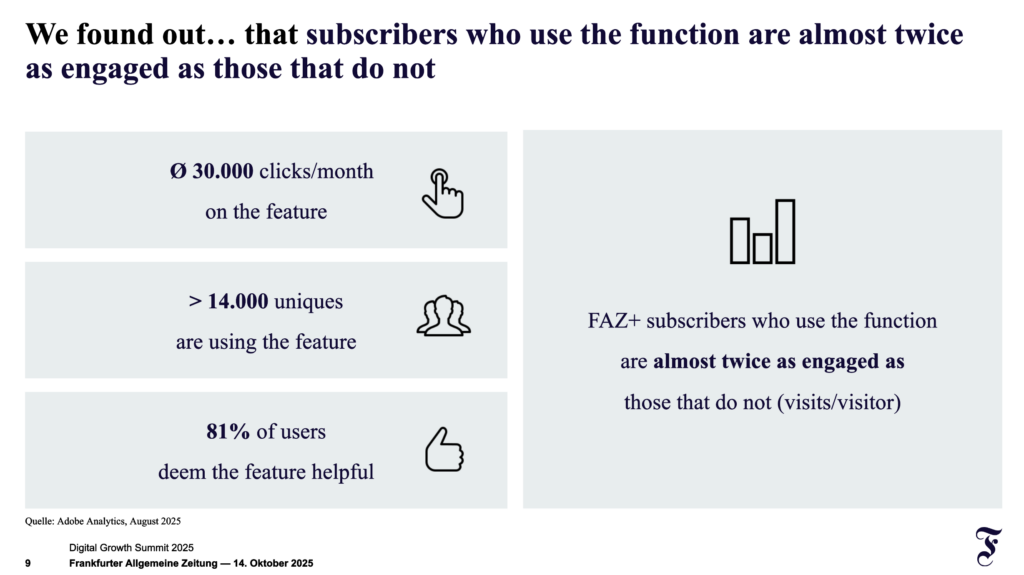
FAZ uses AI the same way inside its subscription: its AI article summaries exist to make the product stickier, and subscribers who use them are twice as engaged as those who don’t. That engagement lowers churn — and helped carry the paper past its goal of 300,000 digital subscribers by the end of 2025, with 400,000 by 2030 now in its sights.
The race worth winning
Through these case studies shared at the Digital Growth Summits of the past years, we see that publishers are owning their audience, building products people genuinely want to come back to, and using AI to deepen the experience instead of giving it away. When discovery is being automated away, the reader who comes to you directly is the most valuable thing you have.
And this is only the start of the conversation. On 15 October, the Digital Growth Summit returns to Leuven for DGS26. Expect the boldest publishers, product leaders and innovators in the industry sharing the strategies, experiments and hard numbers behind winning back the reader, on stage and in the room.
Digital Growth Summit is coming back
Once a year, Europe’s media leaders step out of the newsroom to compare notes on AI, growth, and what’s next for journalism. Join them this October in Leuven.


Other Blog Posts



Stay on top of the game
Join our community of industry leaders. Get insights, best practices, case studies, and access to our events.
"(Required)" indicates required fields