Why attend a conference?
This is my third year organizing the Digital Growth Summit, so I’ve had to answer this question more often than most.
The usual answers are perfectly good: there’s a learning budget with your name on it, you can connect with people you don’t see often, and occasionally a speaker says something that still resonates with you years later.
As I said, these are all good reasons, but I think there’s a better one.
2026 marks Twipe’s 9th edition of the Digital Growth Summit. This year’s event takes place in our hometown of Leuven, Belgium, on October 15th. Learn more here.
A book that explains it better than I can
Two years ago I read the book How Big Things Get Done, by Bent Flyvbjerg and Dan Gardner. Flyvbjerg is a Danish professor who built a database of tens of thousands of major projects, from large software launches to railway construction works. His goal was to compare the projected timeline and budget of these megaprojects at the start (what they thought it would be) versus the end (what it actually was).
The pattern he found is grimly consistent: megaprojects are over budget or over schedule a whopping 92% of the time. IT projects are among the worst offenders — which should give us all pause, because a summit about how technology is shaping news is, in the end, a summit about IT projects.

He goes on to explain that one reason why this is the case. We systematically overestimate how novel our own project is, and believing you are doing something unprecedented gives you licence to ignore everyone else’s data, planning based from your own optimimistic estimates.
However, your project is in nearly all cases not unique and somewhere half a dozen organisations have already built roughly what you are scoping. Some got it wrong in ways you are about to. A few got it right and could tell you why.
The importance of a reference class
What’s the solution to overestimating our capacity to reach our goals? Flyvbjerg’s suggests estimating based on a reference class: work out which group of completed projects yours belongs to, find out what actually happened to them, and start your planning there rather than from a blank page.
What you are borrowing, to be clear, is their outcomes and not their decisions. The reference class won’t tell you whether to build an audio-only app — only your own audience can tell you that. It will tell you it takes considerably longer than the plan says, that the hard part isn’t producing the audio but getting anyone to press play, and that the teams who got there shipped in modules rather than in one release. Those are the insights that travel from one project to a next.

So: why attend a conference?
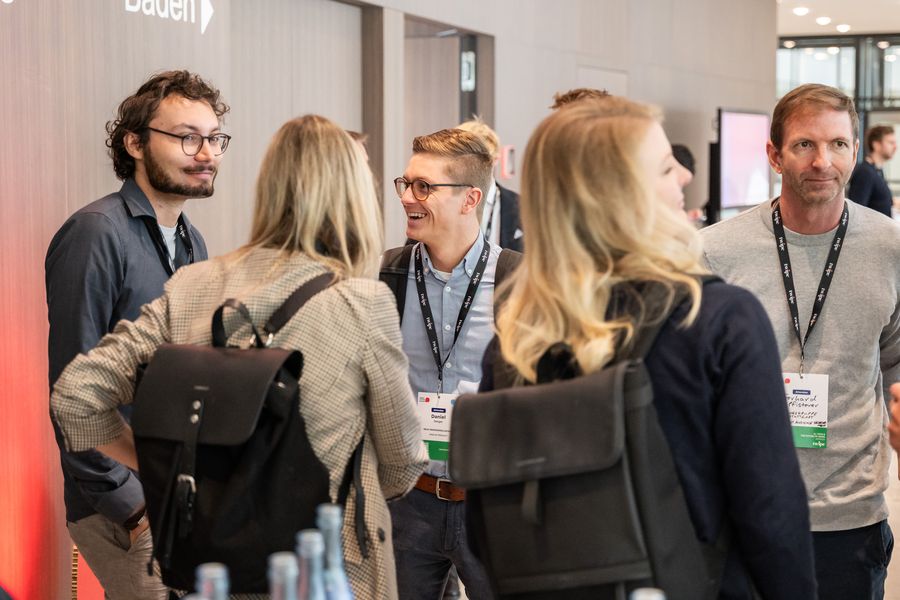
Because a room full of publishers is the densest reference class you will ever have access to, and for one day it is sitting within arm’s reach.
The reference class in the room comes in three forms, and most people only use the first one.
It’s the speakers, but not only the talk they give. A presentation is a finished story, and finished stories tend to leave out the messy eleven months in the middle. The value is in what you ask afterwards.
At DGS26, we’re welcoming best-in-class speakers from Le Parisien, Mediahuis, RedaktionsNetzwerk Deutschland, Kleine Zeitung, and many more who will each bring their own cases. The questions worth putting to them isn’t whether it worked, it’s how long it took before the numbers moved, what they’d cut if they started again, or what would have saved them the most time if they started over? Speakers answer that question honestly far more often than people expect.
It’s the people beside you in the breaks and the workshops. The breaks are not just the gap between sessions; more often than not it’s the whole point of attending! The person to find is the one who shipped the thing you’re about to start.
This is also why we keep DGS deliberately small (it’s a good deal easier to ask a question of eight people around a table than of four hundred in a hall) and build in workshops and several networking moments throughout the day. One of the beautiful things about the news industry is that we more often than not don’t regard each other as competition and can be very open with our hard-earned lessons.
And it’s you. Yes, it’s cheesy, but if you have just spent eighteen months shipping something, you are the reference class for whoever is about to start. That knowledge is worth something to the room, and you’ll find people trade back generously once you go first.
Shaping the future of news. Together.
At Twipe, our mission is to “shape the future of news. Together.” The full stop before that last word is the right emphasis. Shaping the future of news is not something any publisher needs to do alone.
That’s most of the reason we built the Digital Growth Summit in the first place. Not to put a programme in front of you, but to put you in a room with people who have already troddent the path that you’re about to.
Your project is not unique and this is great news! It means someone in that room already knows the answer. So come to the Digital Growth Summit on October 15th in Leuven (Belgium) with a question you need answered, and something hard-won to trade for it.
Other Blog Posts


Stay on top of the game
Join our community of industry leaders. Get insights, best practices, case studies, and access to our events.
"(Required)" indicates required fields